
Smarter automation, better outcomes

Execution quality in corporate bonds is no longer just about access to liquidity as traders seek greater efficiency and superior trading results throughout the investment lifecycle.
Across our platform, Adaptive Auto-X™ (ADX) is already unlocking execution cost savings, projected to be more than $1 billion annualized when applied to market-wide client trades. Opportunities emerging from liquidity provision and client-to-client crossing provide further cost savings. Based on TRACE activity, client buyers and client sellers crossing at the midpoint could lead to a potential annualized savings of up to $2B under simplifying assumptions1.
This reflects a broad shift: automation is no longer just about efficiency; it’s becoming a measurable driver of better execution outcomes.
Auto-X usage in US HG and US HY client trades over time
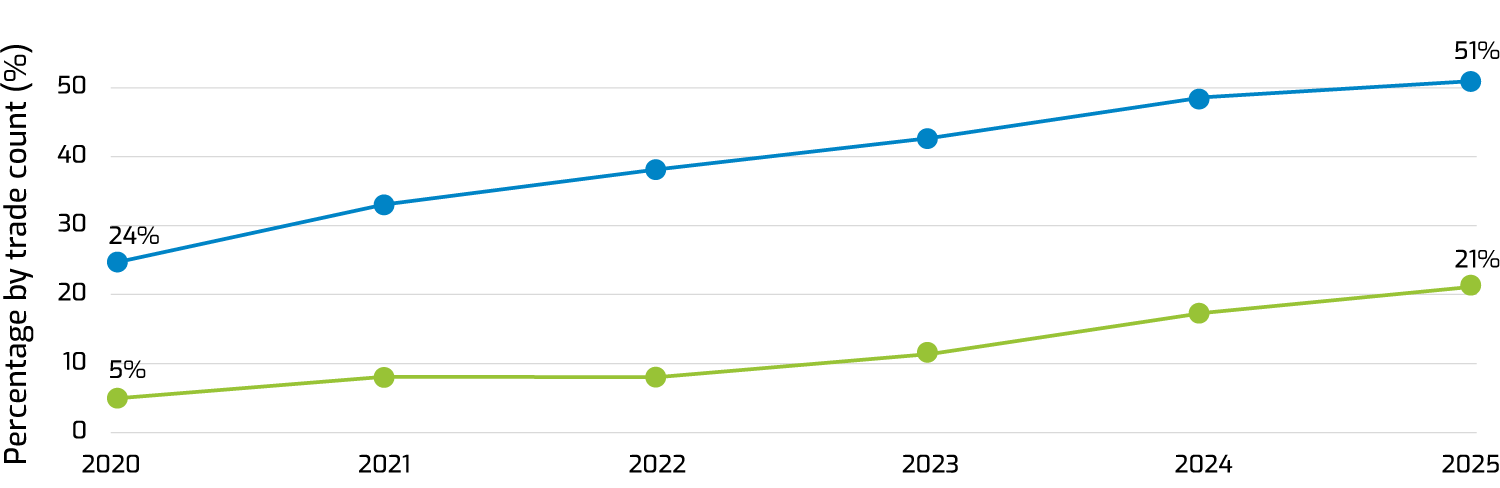
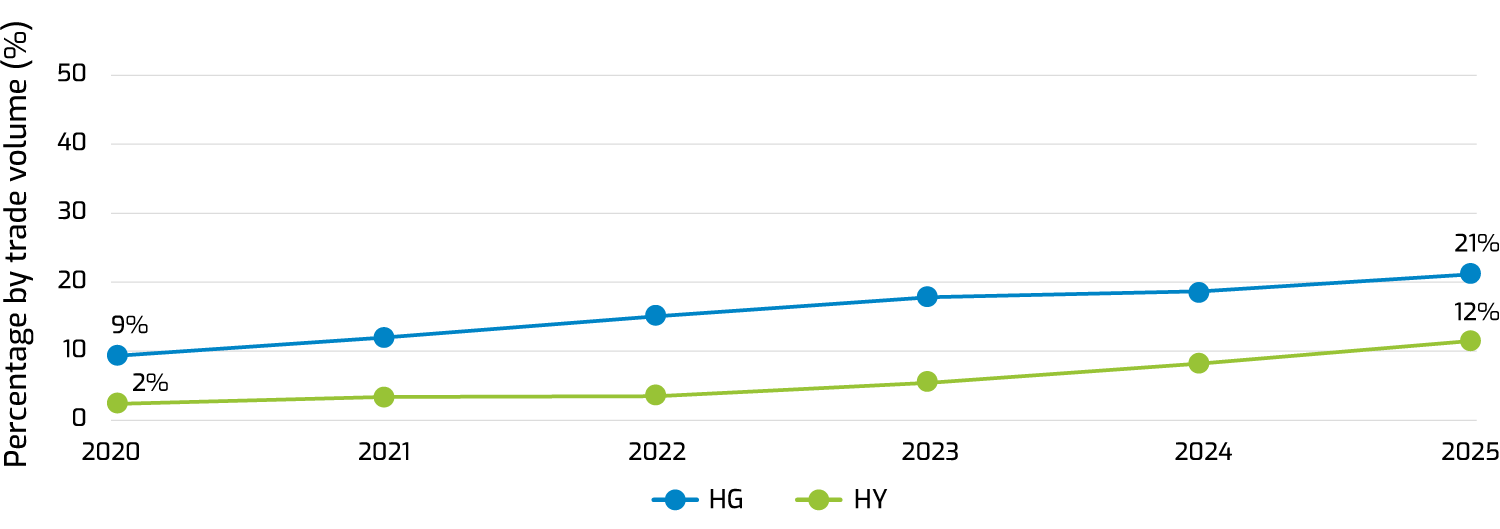
Figure 1: Growth in automation adoption in the last 5 years across US HG and US HY
1The maximum possible crossing opportunity is estimated under simplifying assumptions that clients’ contra volume can be netted without taking into account client constraints like specific spot times, trading urgency, etc.
MarketAxess has been at the forefront of this shift, providing innovative tools to automate and enhance our clients’ trading experience. That partnership has resulted in a progressively larger portion of order flow being automated each year: 47% of platform executions and 20% of volume in 2025, compared to 20% and 8%, respectively, in 2020 across USHG and USHY combined. In 2025, our Power Automation Clients2 automated an even greater share of their flow: 94% by count and 61% by volume.
Each step along the evolution of Auto-X is an advancement in sophistication that yields better trading outcomes with less effort.
Classic Auto-X RFQ
First-generation Auto-X RFQ introduced rules-based automation, allowing traders to define execution guardrails and reduce the need for manual intervention. Clients had to trade manually on only 6% of their Auto-X orders in Q1 2026; a huge efficiency gain.
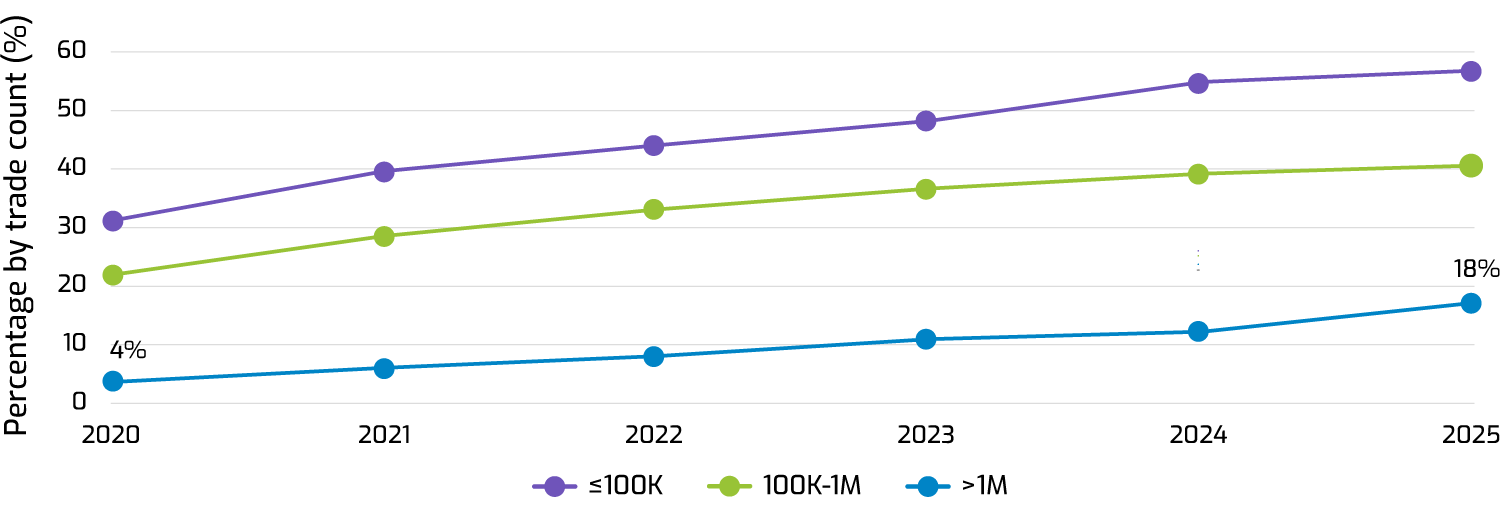
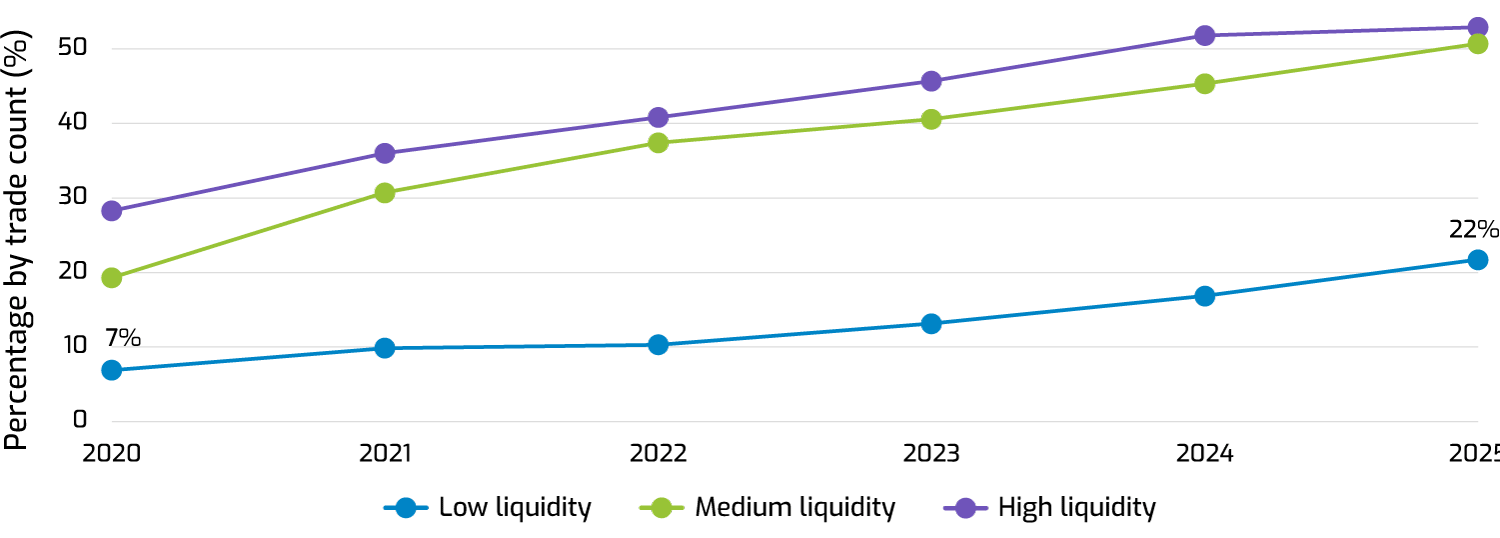
We’re seeing increased automation usage on the platform even in larger orders and less liquid bonds. Last year in USHG, 18% of $1M+ trades were executed via Auto-X, up from 4% in 2020. For illiquid orders (RLS ≤ 3), usage of Auto-X in USHG jumped from 7% to 22% over the last five years. A similar upward trend exists in USHY: last year, 5% of $1M+ orders and 10% of illiquid orders were executed via Auto-X, whereas in 2020 the Auto-X rate for both order types was negligible.
US HG - Auto-X usage by trade size
US HY - Auto-X usage by trade size
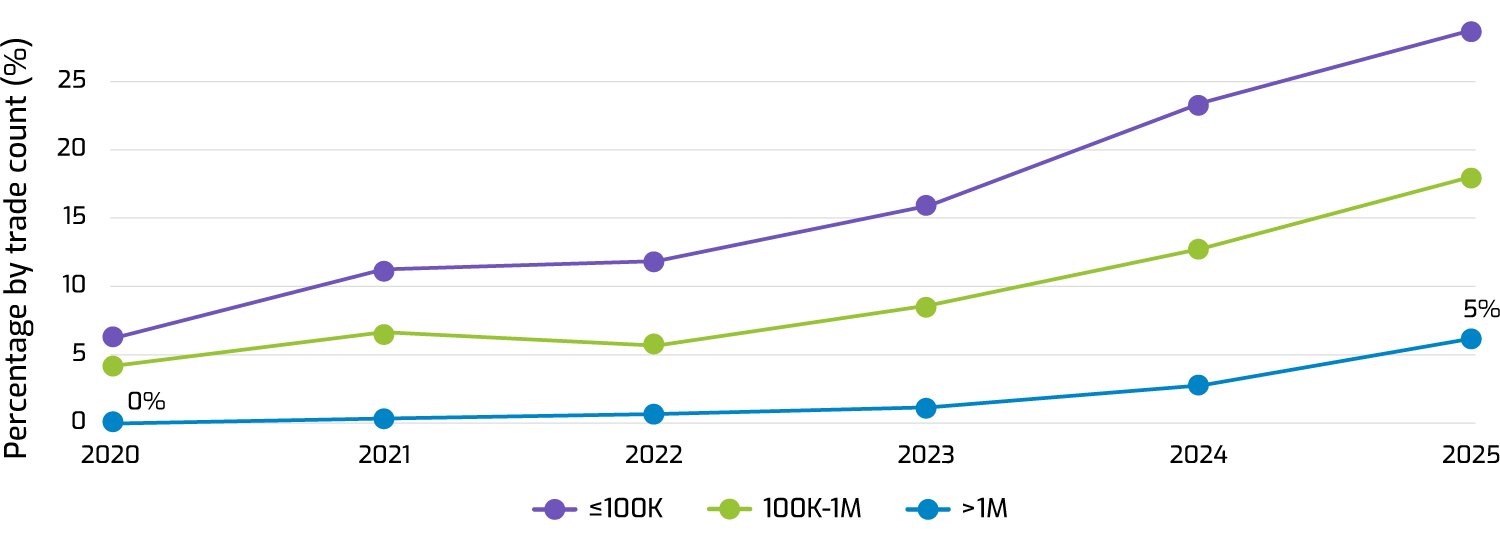
Figure 2: Growth in Auto-X usage in the last 5 years for different trade size buckets across USHG and USHY
2Top Auto-X client by volume in 2025.
US HG - Auto-X usage by liquidity
US HY - Auto-X usage by liquidity
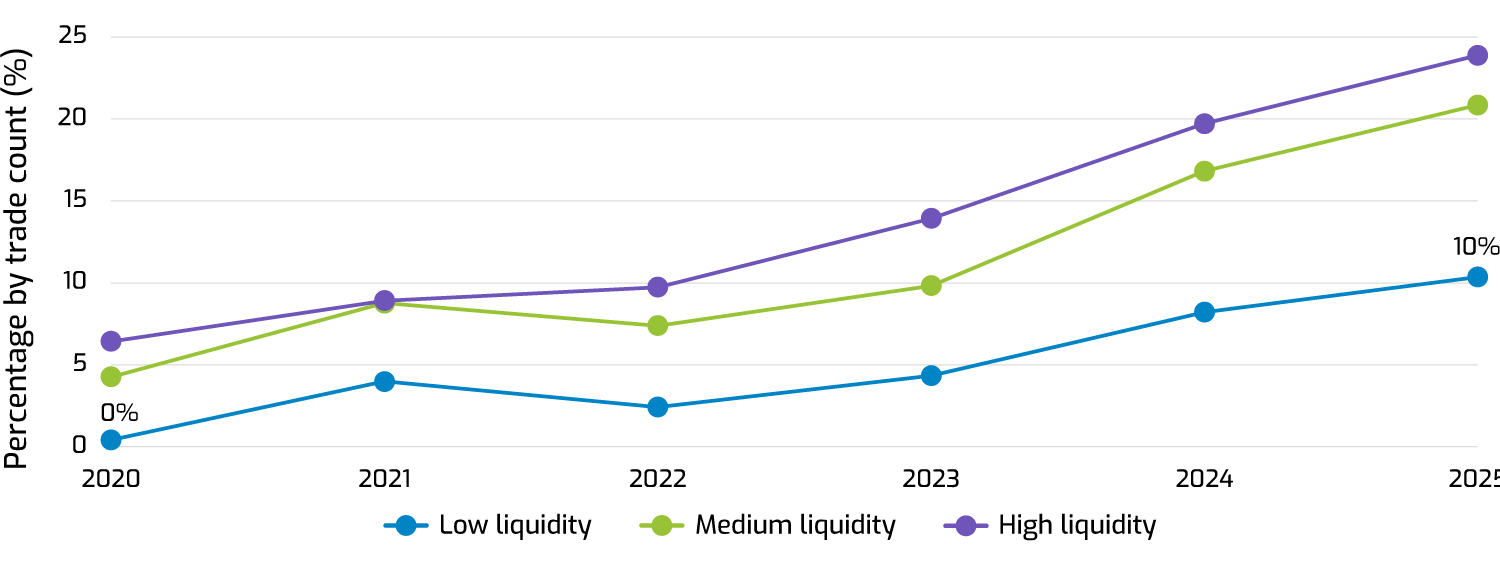
Figure 3: Growth in Auto-X usage in the last 5 years for different liquidity profiles across USHG and USHY
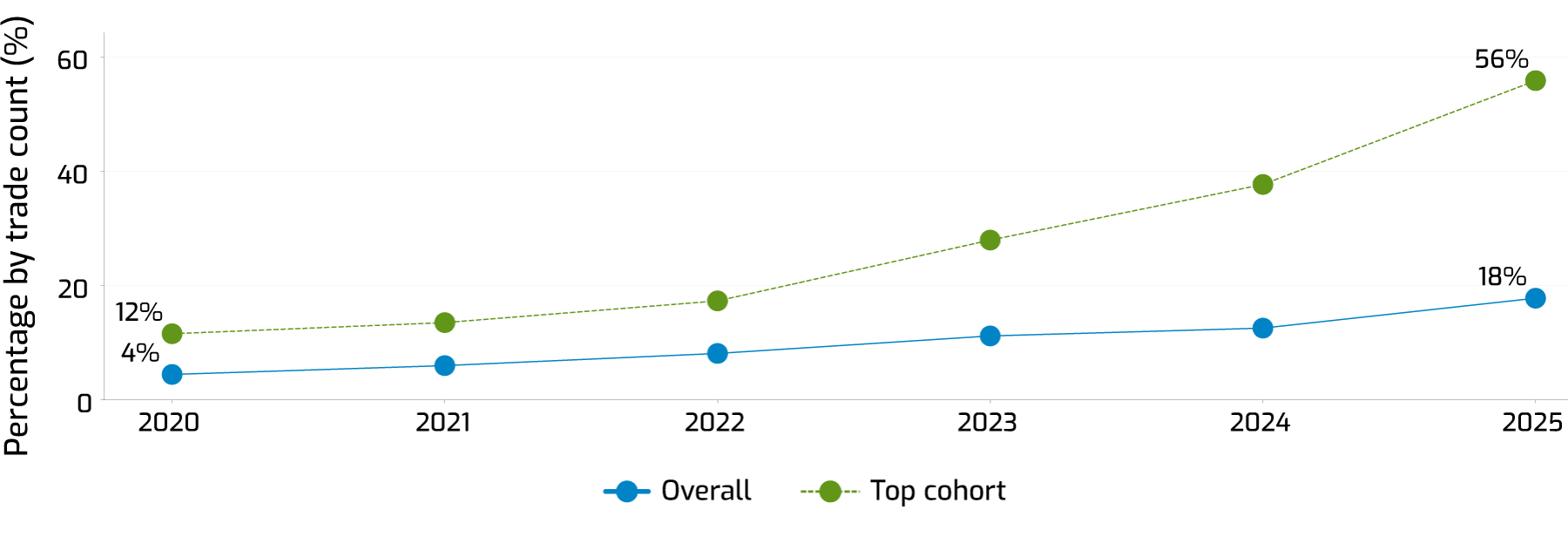
These trends are amplified within our Power Automation Clients. In 2025, they executed 56% and 58% of USHG $1M+ and illiquid (RLS ≤ 3) orders via Auto-X, and 34% and 43% of the same orders in USHY (see Figures 3.2 and 3.3).
US HG Auto-X usage in large trades (>1M)
US HY Auto-X usage in large trades (>1M)
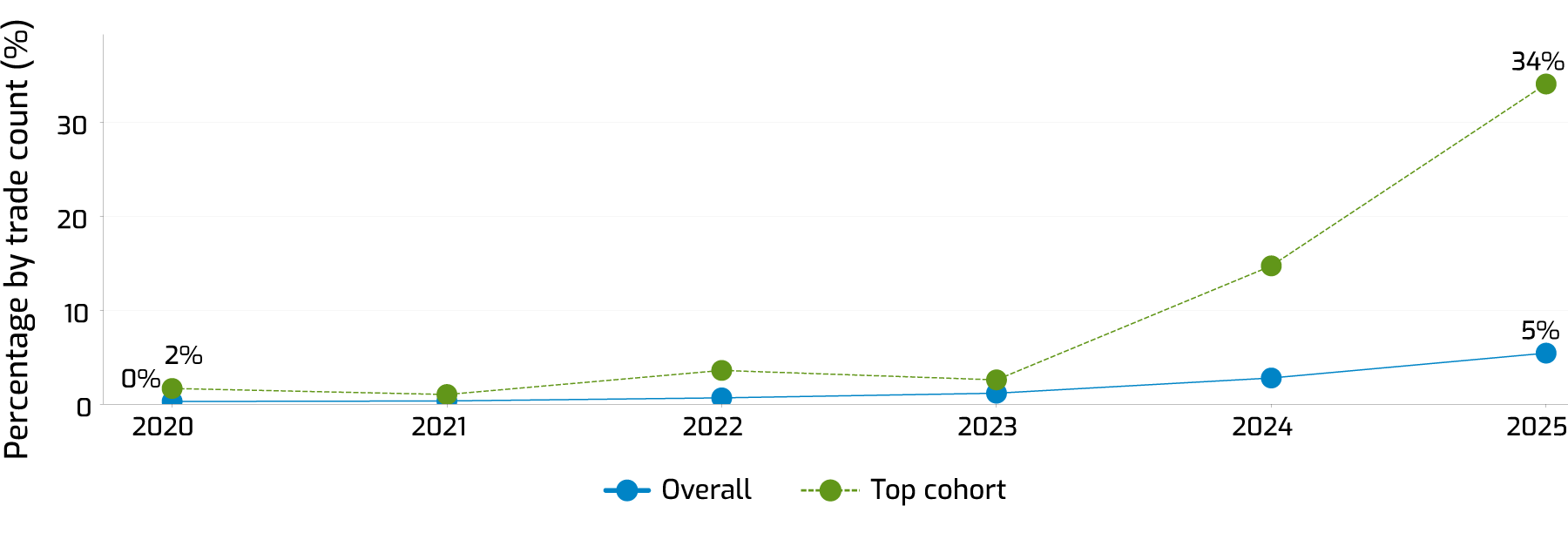
Figure 3.2 Growth in Auto-X usage in the last 5 years for large-size trades in USHG and USHY, overall and for power Automation clients.
US HG Auto-X usage in illiquid bonds (RLS ≤ 3)
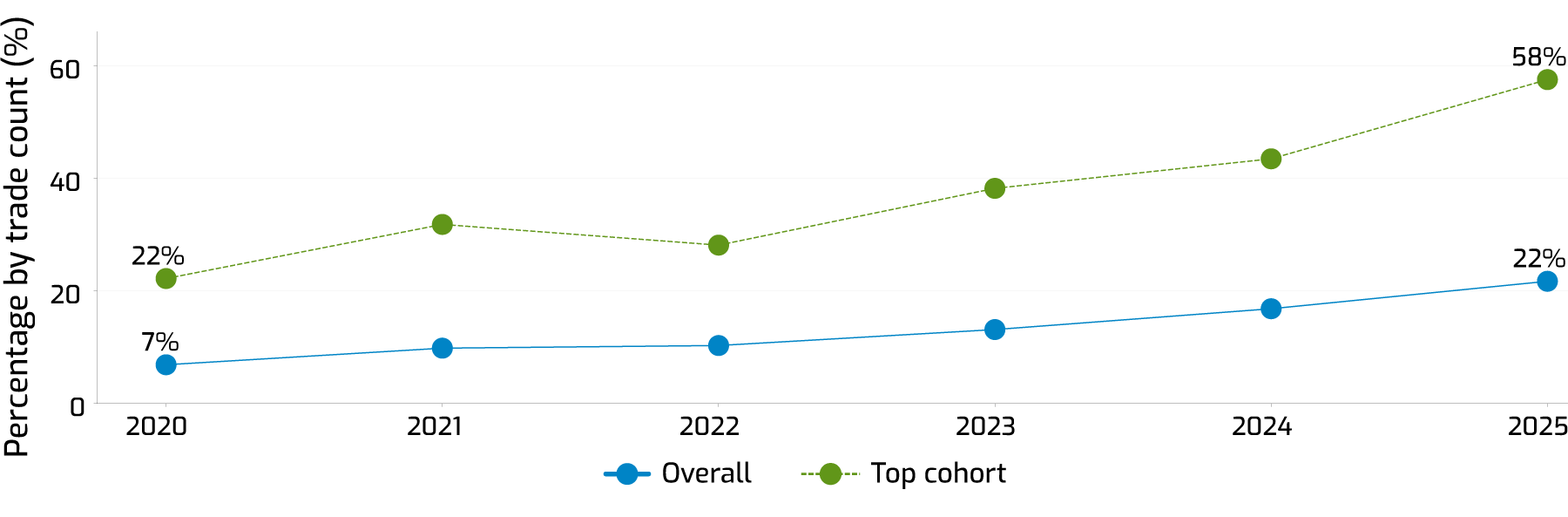
US HY Auto-X usage in illiquid bonds (RLS ≤ 3)
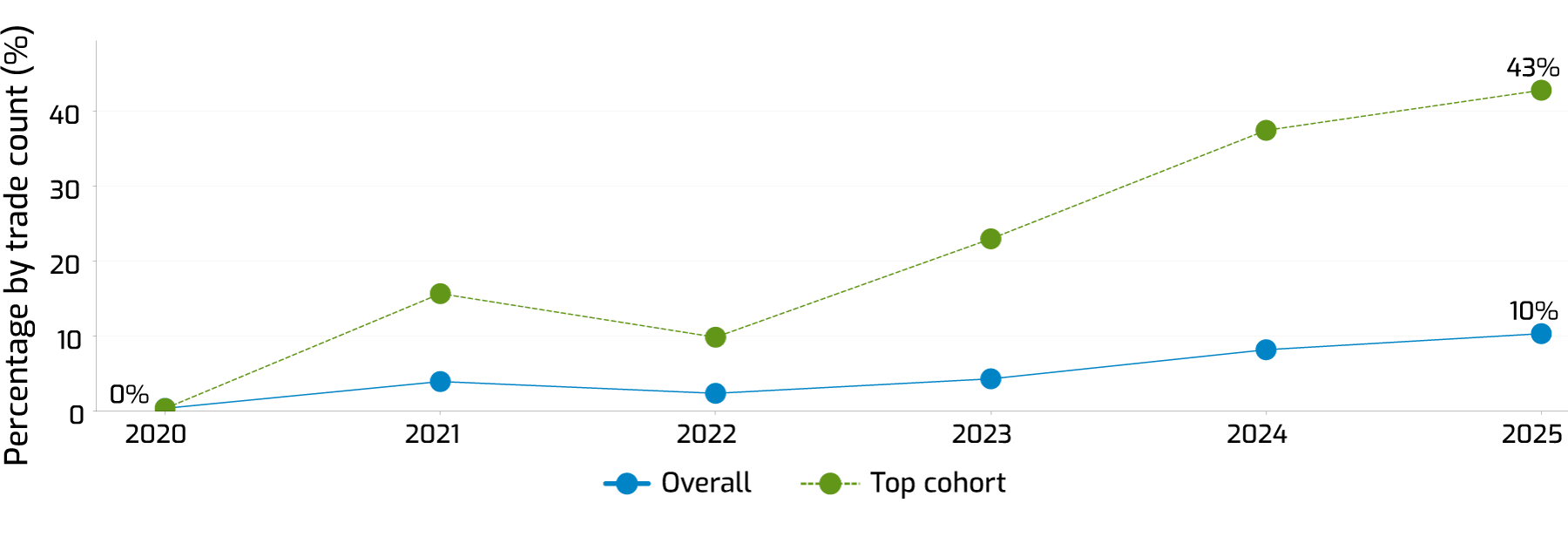
Figure 3.3 Growth in Auto-X usage in the last 5 years for illiquid bonds in USHG and USHY, overall and for Power Automation clients.
Adaptive Auto-X Take
Second-generation Auto-X RFQ, ADX Take, represents a dramatic advance, making Auto-X both easier to use and more effective. Behind the scenes, the ADX algo leverages models built to dynamically determine execution levels and guardrails based on factors such as trade size, liquidity and client context.
The result is not just more automation, but better outcomes. Based on back-testing, Take reduces how often clients need to step in manually by 36% for USHG and 73% for USHY.
When Take is tuned to achieve the same overall fill rate of first-gen Auto-X RFQ orders, including orders that executed due to client overrides, it improves TCA compared to first-gen Auto-X3, as % of CP+™a bid/ask spread, by 4.8% for USHG and 7.2% for USHY.
3TCA benefits are based on back-testing of historical on-platform RFQs using the Take model versus RFQ’s actual TCA.
What this means for your portfolios
For traders, the implications are straightforward: lower execution costs, fewer manual interventions and more consistent outcomes. In practical terms, the savings shown in Figure 4 translate to approximately $70 to $330 per million traded, depending on market and trade characteristics. Automation is no longer about doing the same trades faster or with less effort; it is about achieving better execution results.
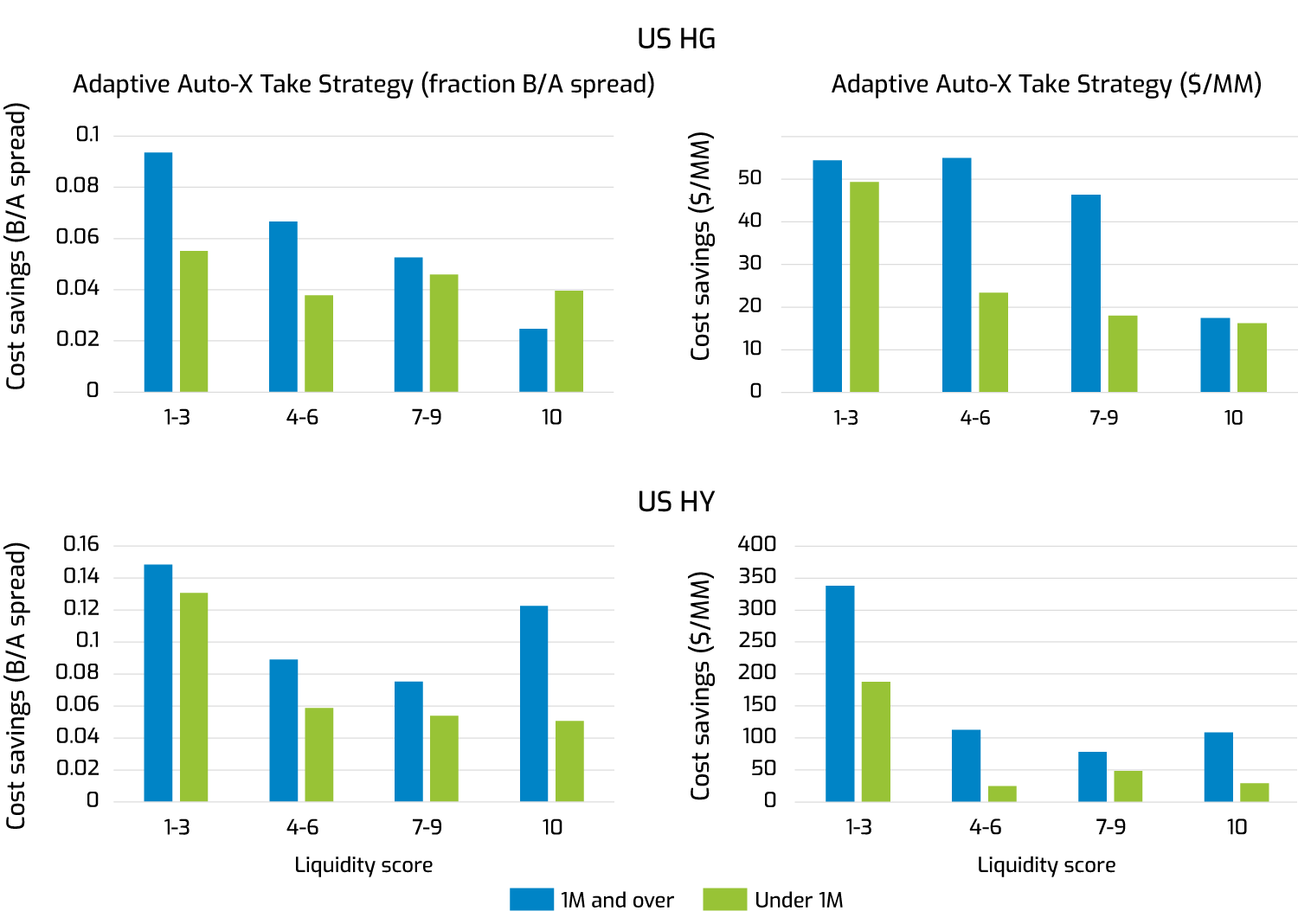
Figure 4: Cost savings of Adaptive Auto-X Take Strategy to 1st-Gen Auto-X, normalized by the CP+ bid/ask spread (left) and as $/MM (right).
ADX Take with liquidity provision
Even when RFQ automation improves the average cost of execution, traders are still crossing the bid-ask spread. Our ADX Take strategy introduces an additional opportunity: rather than always taking liquidity, traders can intelligently provide it, ultimately capturing spread instead of paying it. Delaying taking liquidity to provide liquidity offers an additional opportunity to improve execution quality by attempting to earn the bid-ask spread rather than crossing the spread.
The opportunities for capturing the bid-ask spread via client-to-client crossing and the resulting TCA savings can be significant. Based on TRACE client, non-PT volume from Q1 of 2026, 22% of HG and 31% of HY volume have opportunities to cross between buyers and sellers.
Our second-generation Auto-X RFQ, ADX Take, offers the capability for client-to-client crossing by delaying the RFQ for some time to allow responding to contra platform IOIs and resting in Live Markets. The algo uses a recently developed Provide Rating, an indicator of whether the market risk taken on by providing and waiting for a possible contra is worth the benefit. Simulation results of on-platform RFQs with a favorable Provide Rating (26% of USHG and 32% of USHY RFQs) are shown in Figure 5. Providing liquidity before RFQing can improve execution cost by 7% for USHG and 27% of USHY, where improvement is in % of the CP+ bid/ask spread.
Cost improvement by wait time for Gold Rating - US HG
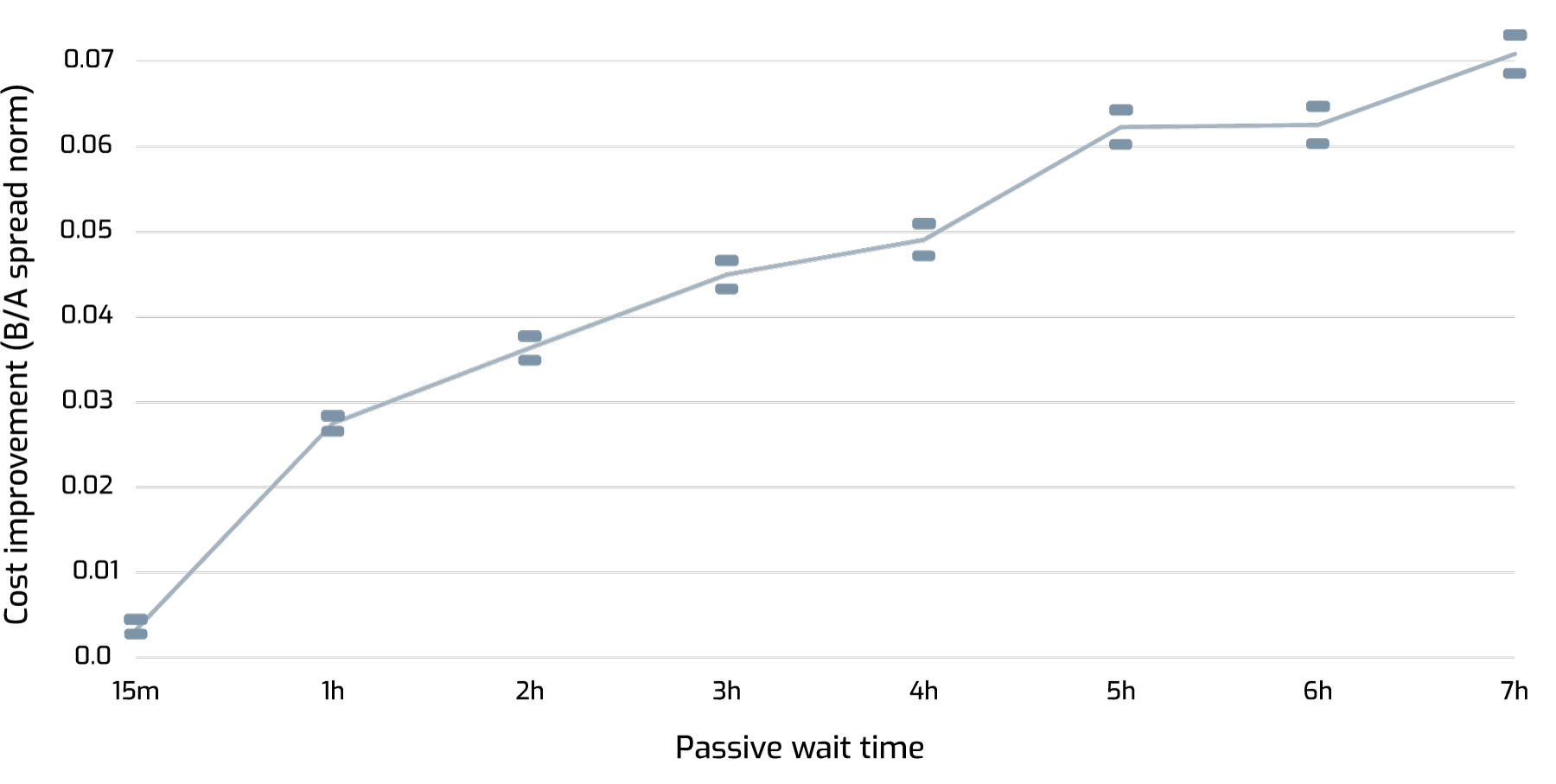
Cost improvement by wait time for Gold Rating - US HY
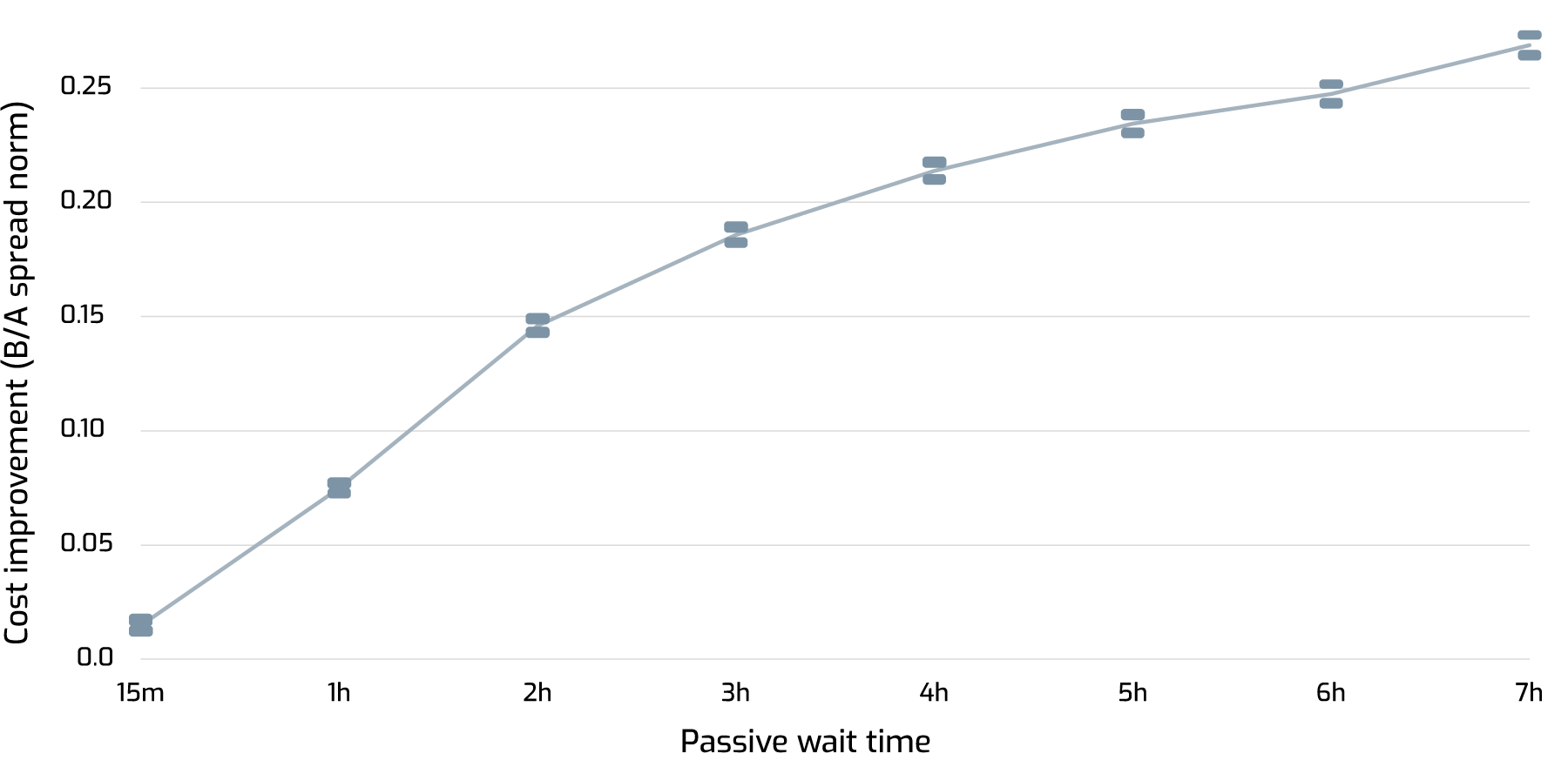
Figure 5: TCA improvement of liquidity provision before RFQ. Improvement is normalized by the CP+ bid/ask spread.
Conclusion
The next phase of credit trading will not be defined by whether workflows are automated, but by how intelligently that automation is applied. Our Adaptive Auto-X suite of execution tools shows how data-driven execution can improve both efficiency and outcomes at scale, while opening new opportunities to capture value.
To quantify what this could mean for your portfolios, contact your MarketAxess representative or our Automation team via email via email.