
AxessPoint: As AI hyperscaler liquidity thins, Open Trading fills the gap

Introduction
AI hyperscaler debt entered the summer as one of the more liquid areas of investment grade credit. However, early signs of strain were already emerging. In July, our analysis of Oracle highlighted the growing importance of Open Trading in providing liquidity as credit conditions deteriorated (Read more here).
Since then, these pressures have extended across the broader hyperscaler universe. Spreads have widened sharply while transaction costs have risen, bringing hyperscaler bonds roughly in line with the broader investment-grade market. As conventional liquidity has become more expensive, Open Trading® has taken on a larger role in providing liquidity.
Universe
The analysis uses MarketAxess client activity and CP+™ pricing data from January through the end of October 2026. The universe covers investment-grade corporate bonds, split into three groups:
AI hyperscalers: bonds issued by AMZN, AVGO, GOOGL, META, MSFT, NVDA, ORCL and SPCX.
Rest of TMT: TMT bonds not issued by the tickers listed above.
Rest of IG: all other investment-grade bonds in the universe.
The stage is set
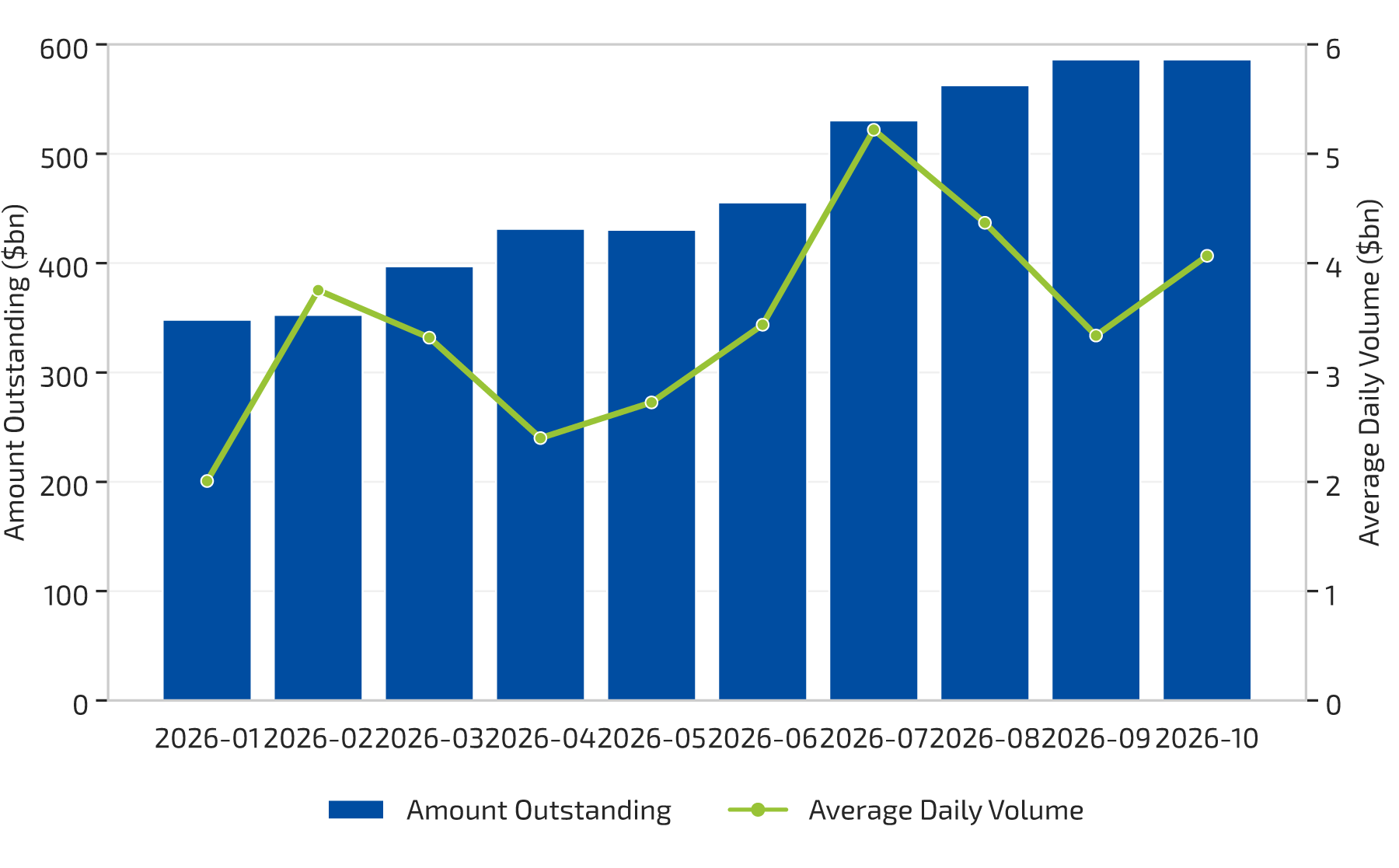
Hyperscaler issuance and secondary market activity have been among the biggest credit stories this year. Investment grade hyperscaler issuance has risen by nearly $238 billion, or 68%, while daily TRACE trading volume has increased by $2.1 billion, or 105%. Hyperscalers now represent roughly 3.7% of the total outstanding investment grade credit market, up from 2.6% at the start of the year. Together, these eight issuers have become an increasingly important part of the market.
Amount outstanding and average daily volume over time for hyperscaler bonds
Hyperscaler credit reprices
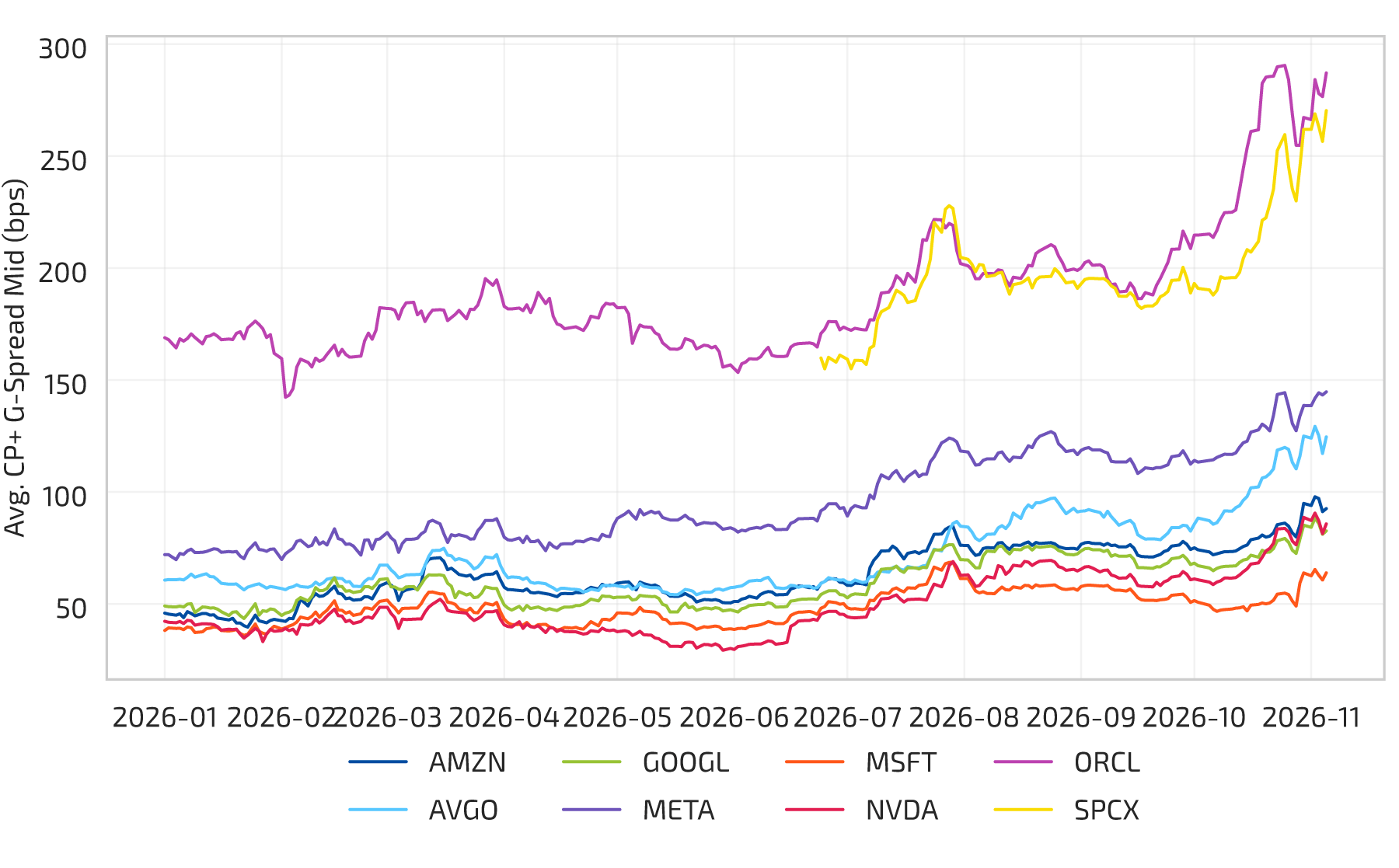
The average CP+ G-spread on AI hyperscaler debt has widened by 48 bps since the start of July, moving from +92 bps to +140 bps by the end of October. The selloff has been broad-based, but the heaviest repricing has been concentrated in a handful of issuers: ORCL (+113 bps), SPCX (+75 bps), and AVGO (+51 bps).
CP+ G-Spread Mid over time
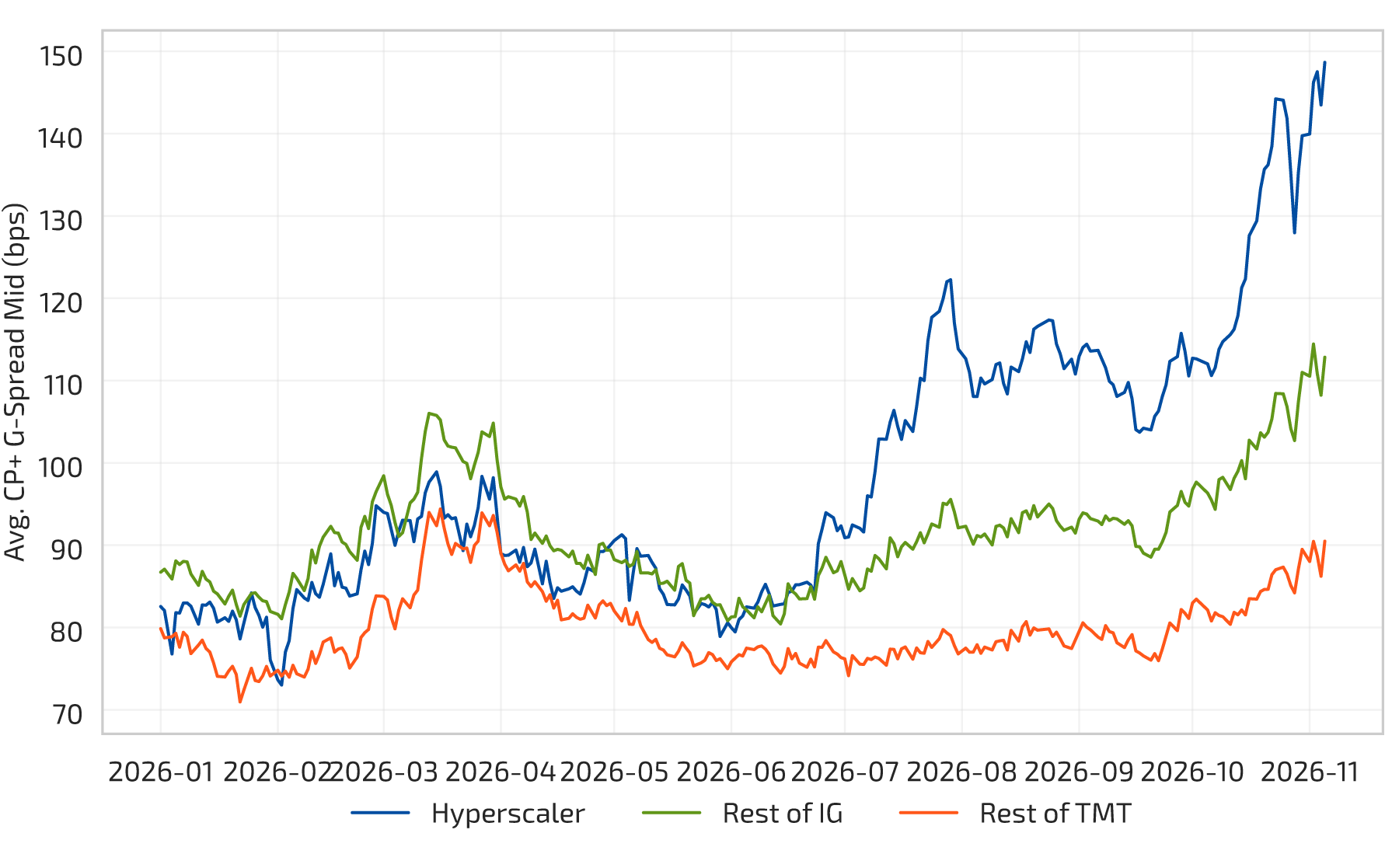
CP+ G-Spread Mid over time for AI hyperscalers
Liquidity becomes more expensive
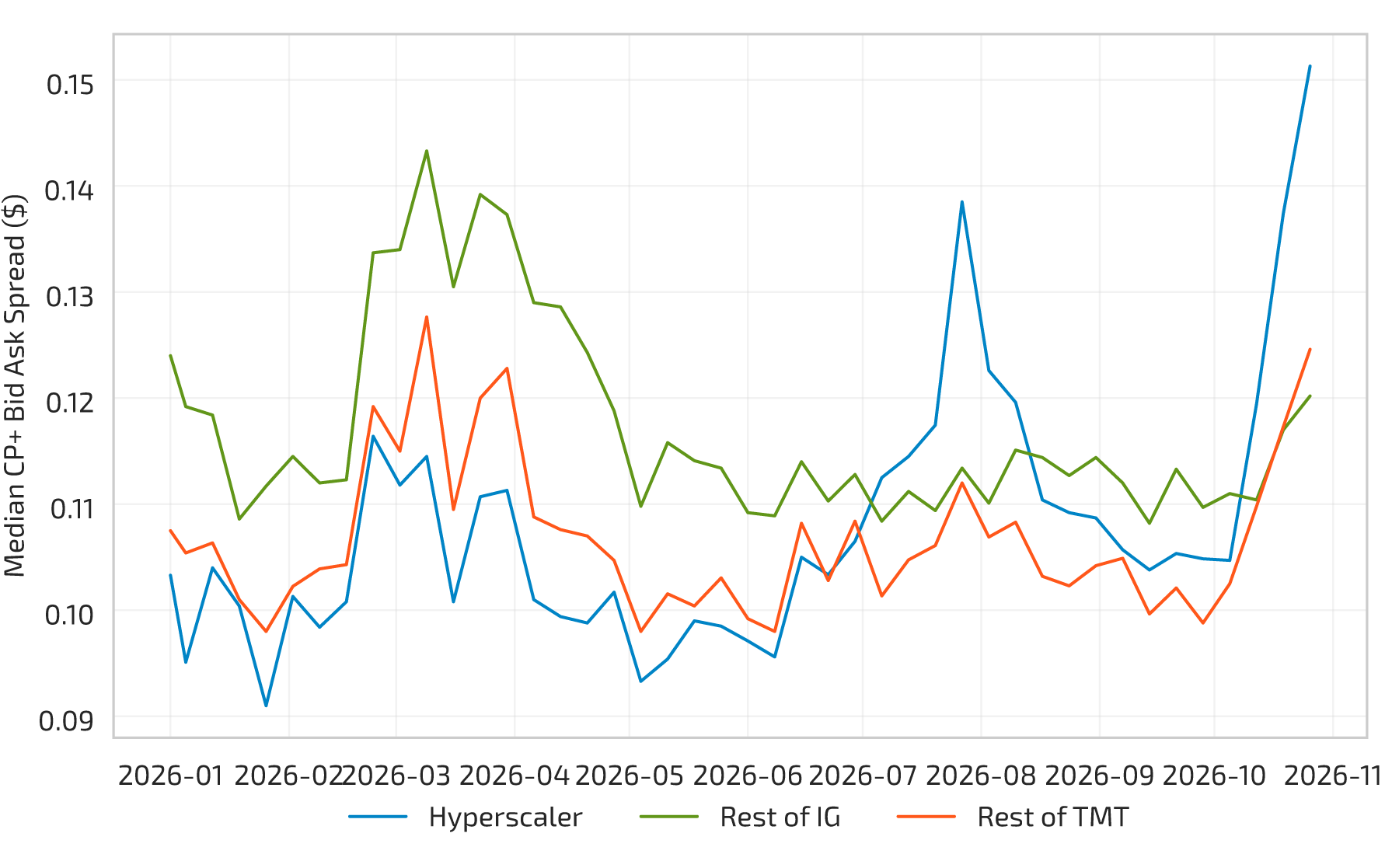
As spreads have moved, liquidity has become more expensive. The median bid-ask spread, as measured by CP+, has risen from $0.10 in early July to $0.15 at the end of October, an increase of roughly 50%. Trading AI hyperscaler bonds now costs significantly more than trading the rest of investment grade, erasing the liquidity advantage the sub-sector has historically enjoyed.
CP+ bid-ask spread over time
Open Trading takes a larger role
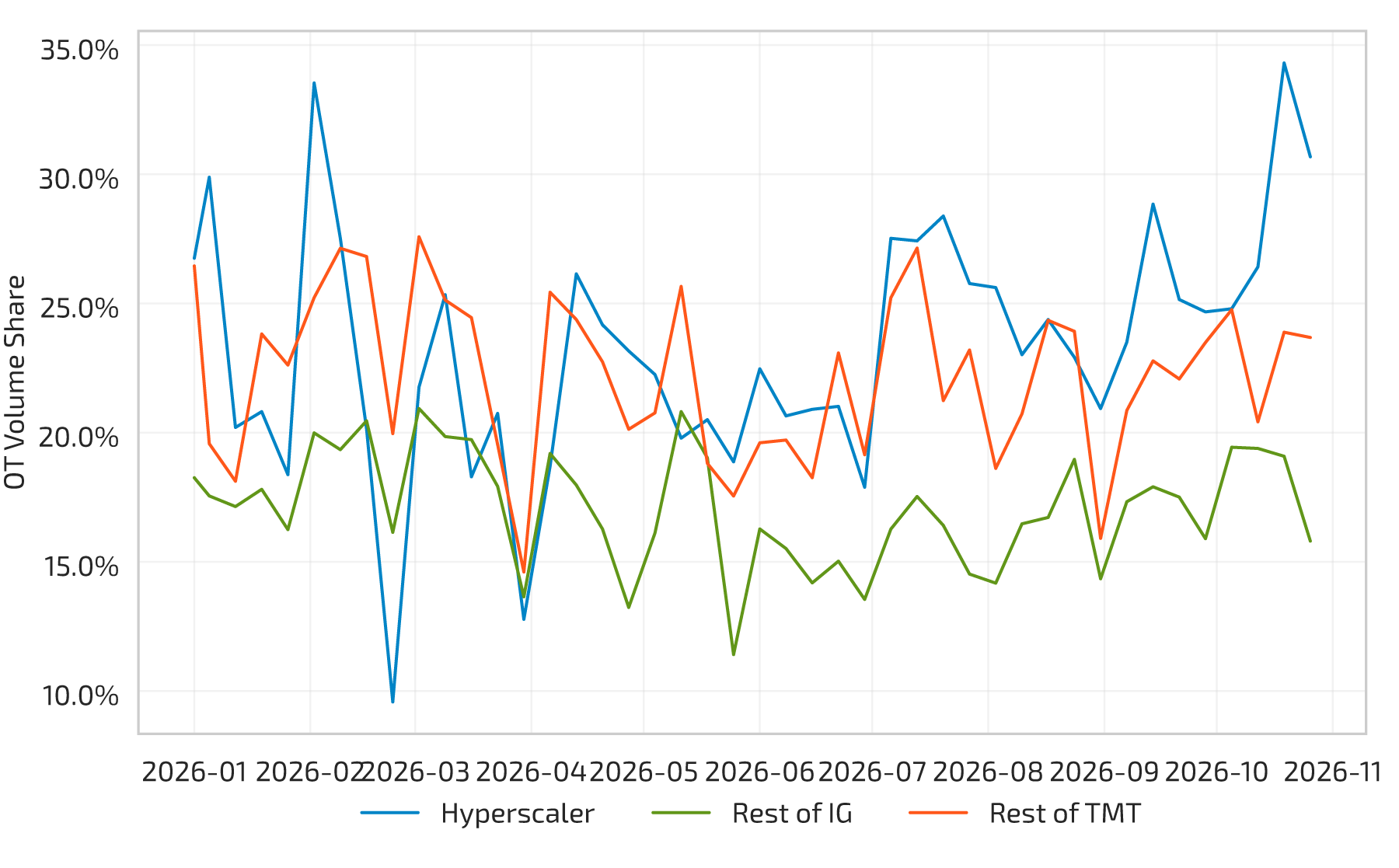
As traditional liquidity has gotten more expensive, Open Trading has become a more important source of it. In October, Open Trading's share of executed volume climbed 10 percentage points. Open Trading now provides liquidity to 32% of traded volume on the platform in AI Hyperscaler names.
OT share of executed volume over time
Conclusion
The liquidity advantage AI hyperscaler credit enjoyed earlier this year has largely disappeared. As the sub-sector has grown and trading activity has increased, trading costs have converged with the broader investment grade market. At the same time, Open Trading has become a larger part of the liquidity mix, broadening the sources available to clients.